Beagles are compact, muscular dogs with a short, dense coat, a round ribcage, and a proportional build that doesn't change much between males and females.
Their body is specific enough that generic sizing, or sizing by weight alone, regularly produces clothes that pull, twist, or restrict movement.
Getting it right requires three measurements, an understanding of the breed's physical proportions, a clear reason for putting clothes on the dog in the first place, and the right fabric for the job.
Direct answer
The single most important step is measuring your Beagle before buying anything.
Neck circumference, chest circumference, and back length are the three measurements that determine whether a garment fits.
After that, the choice of garment type and fabric depends on the reason for dressing the dog and on the conditions inside the home.
The Beagle's body and why it matters for fit
Beagles have a compact, muscular body that is slightly longer than tall.
The chest is deep and broad, and the breed has straight, strong legs well-proportioned to the body.
Beagles are classified as round-chested dogs, alongside Cocker Spaniels and Labrador Retrievers.
A round chest is circular when viewed from the front, with the ribcage sitting roughly at elbow level.
This is different from a deep chest (sternum drops below the elbows) or a barrel chest (very wide and cylindrical).
When the chest shape doesn't match the pattern, the fabric has to go somewhere; it pulls, shifts, and rotates to release tension.
A coat can look right when a dog is standing and fail the moment the dog starts moving.
Beagle-specific apparel also needs to account for the type of tail, the chest-to-waist ratio, and the natural shape of the spine.
Adult Beagles have a withers height of 13–16 inches (33–41 cm) and a body length of 20–25 inches (51–64 cm).
A typical Beagle weighs between 20 and 24 pounds.
Because of the breed's shape, the chest measurement often places them in a different size category than their back length.
The chest is usually the controlling measurement, buy for the chest, then verify the length works.
Shop the dog drama
Quick exits to coats, collars, beds, crates, harnesses, leashes, muzzles, and grooming - now without the old image menu circus.
How to measure your Beagle
Take measurements with a soft tape measure while the dog is standing on a flat surface with legs square under the body.
Sitting or lying down compresses the spine and ribs and produces inaccurate results.
Neck: Measure around the base of the neck where it meets the shoulders. Keep the tape snug but not tight.
Chest: Measure around the widest part of the chest, just behind the front legs. Make sure the dog is standing.
Back length: Measure from the withers to where the tail meets the spine. Keep the tape straight along the back.
Once you have these three numbers, compare them against the brand's size chart, not a generic breed guide.
Charts vary significantly between manufacturers.
Measurement-based guides from apparel brands are clear on this point: your dog's individual body is what matters.
A "small" Spaniel can end up in an extra-large coat.
As a general starting reference, typical small-size Beagle measurements cluster around a 6.5-inch neck, a 9-inch back, and a 15-inch chest.
Beagles generally wear a medium, but as with so many other sizing issues, individual dogs vary.
After putting any new garment on, check that you can slide two fingers comfortably under every closure and that the dog can walk, sit, and lie down without the fabric bunching, riding up, or pulling forward.
When a Beagle at home actually needs clothes
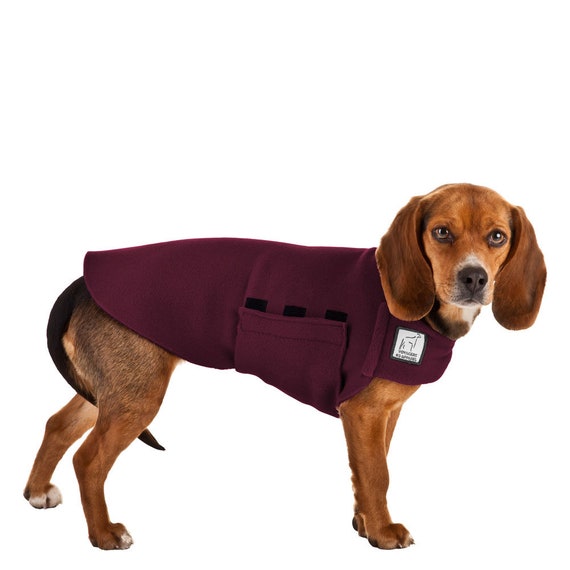
Healthy adult Beagles in a normally heated home don't need clothes.
Short-coated breeds like Beagles provide little protection against the cold, and these dogs may need sweaters or extra warmth when temperatures drop.
The practical threshold is roughly 45°F (7°C) for extended exposure. A home kept at typical indoor temperatures (65–75°F / 18–24°C) is above that threshold.
There are four situations where clothes at home make sense:
Cold home temperatures. If the home falls below 55–60°F (13–15°C) in winter, or has cold drafts at floor level where the dog sleeps, a light sweater or fleece layer can help.
Some owners report keeping a t-shirt on the dog when it's chilly inside.
Puppies. Puppies are particularly susceptible to the cold.
Their coats haven't fully grown in yet, leaving them without a fully insulating coat to offset the chill.
They are also much smaller and will have a harder time regulating their body temperature when they get cold.
Senior dogs. Older Beagles generate less body heat through activity. A fleece layer at home can help an older dog stay comfortable.
Post-surgery or medical recovery. Veterinarians sometimes recommend garments to protect surgical sites, prevent licking, or retain warmth during recovery.
In these cases, the vet should guide the choice.
A secondary benefit is shedding management. Beagle clothes can help reduce shedding by trapping some of the loose fur.
A lightweight cotton T-shirt during high-shed seasons can cut down on fur on furniture.
Fabric guide
Cotton is soft, breathable, and comfortable, making it a good option for most dogs.
Fleece is warm, soft, and generally non-irritating, ideal for cooler weather.
Bamboo or organic cotton is hypoallergenic and gentle on the skin, good for dogs with sensitivities.
Breathable, lightweight knits allow for movement and comfort without causing overheating.
Avoid synthetic materials, especially in humid conditions. Vinyl or plastic are not breathable and can cause your dog to overheat.
For home use, cotton and stretchy cotton-blend knits cover most situations.
They're easy to wash, comfortable at typical indoor temperatures, and gentle on the Beagle's short coat and skin.
Fit safety checks
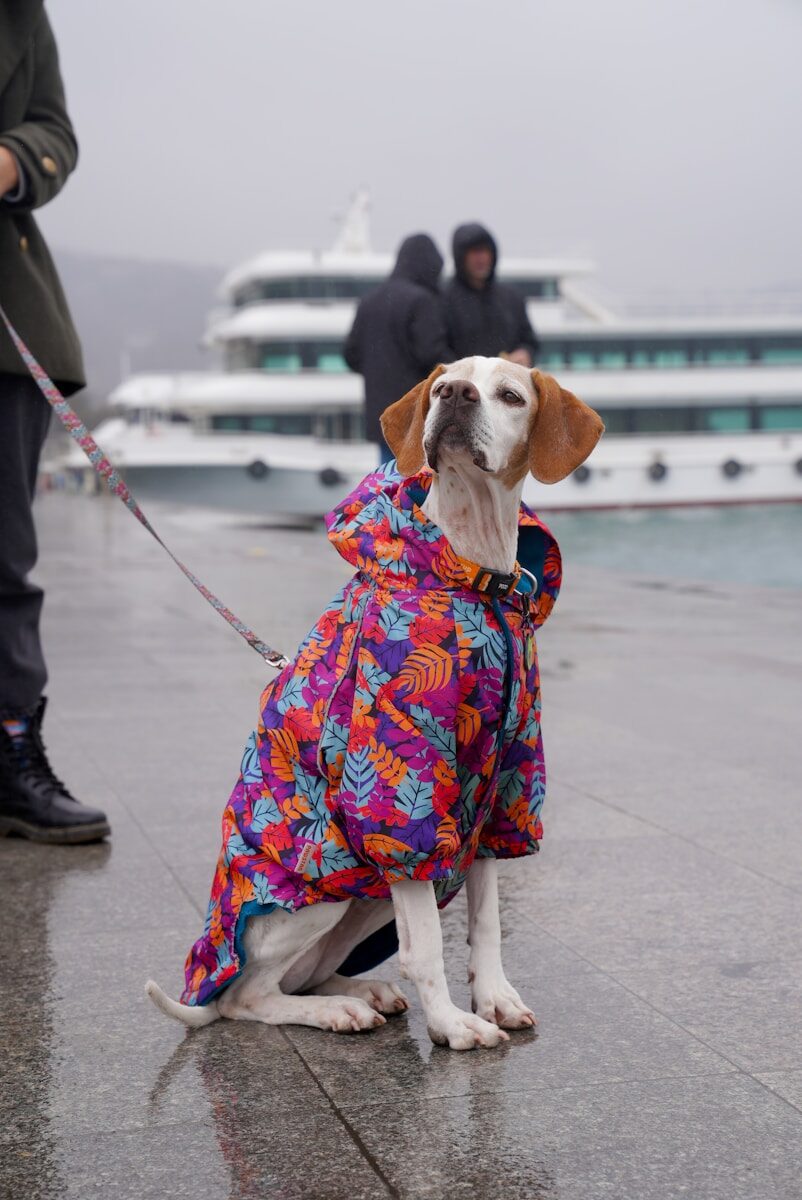
Clothing that's too tight restricts movement and causes chafing. Overly loose garments can cause tripping or tangling.
After putting on a new garment, run through this before leaving the dog unsupervised:
- Can you slide two fingers under the neck opening without forcing?
- Can the dog walk normally without fabric bunching between the front legs?
- Can the dog sit and lie down without pulling backward against the garment?
- Is the belly opening (if present) positioned correctly for bathroom access?
- Are there no loose buttons, drawstrings, or decorative elements the dog could chew off?
Check regularly for redness, rashes, or hair loss, especially around areas where the clothing fits snugly.
Always supervise your dog the first few times they wear clothes to ensure they don't try to remove them by chewing or scratching.
A dog that consistently tries to remove clothing, freezes in place, or shows signs of distress probably doesn't want to wear it.
Common misconceptions
"A Beagle is a medium-sized dog, so medium fits." Weight or general size category doesn't determine clothing size.
Chest measurement does. Two Beagles of similar weight can need different sizes depending on their individual build.
"Generic size charts work fine." They don't reliably.
The Beagle's round chest and moderate back length mean the breed often falls between standard sizes on non-breed-specific charts.
"Clothes are needed to keep a Beagle warm at home." In a normally heated home, a healthy adult Beagle doesn't need indoor clothing for warmth.
Cold floors, drafty rooms, puppies, and senior dogs are the real exceptions.
References
- Voyagers K9 Apparel, Beagle Measuring Guide: https://k9apparel.com/pages/beagle-measuring-guide
- PetSmart, Dog Clothes Sizing Chart: https://www.petsmart.com/help/sizing-charts-H0012c.html