The German Shorthaired Pointer carries a dense, short, rough-textured coat on a deep-chested, muscular body with a pronounced tuck-up at the loin.
That body shape, combined with a single-layer coat and lean muscle mass, creates specific challenges when buying clothes.
Generic sizing rarely works. A coat sized for the chest will gap badly at the waist. A coat sized for the waist won't fasten across the chest at all.
This article covers when a GSP actually needs clothing, what body measurements to take, which garment types fit the breed, how to match fabric and insulation to temperature and activity, and what to look for when buying.
Direct answer
A healthy adult GSP needs a coat in cold weather. That threshold is below 45°F for most adult GSPs.
Puppies, senior dogs, underweight dogs, and dogs with illness need coverage at higher temperatures than that.
For shopping, breed-specific or deep-chest cuts with adjustable belly wraps will fit far better than standard sizing.
The three measurements that determine fit are neck circumference, chest girth just behind the front legs, and back length from the withers to the base of the tail.
Why GSPs need clothing at all
Their short coat makes them more sensitive to cold weather compared to breeds with longer or thicker fur.
Prolonged exposure to cold can lead to hypothermia.
Dogs with short or thin coats, such as greyhounds or German Shorthaired Pointers, are at higher risk of hypothermia because they lose body heat faster.
GSPs have longer guard hairs on their haunches and the underside of their tails, but these are not long enough to provide meaningful insulation.
There is no undercoat. When a GSP stops running and cools down, body heat drops quickly.
While they are running with full energy there is generally no need for a jacket, but as soon as the dog stops or goes on the leash in low temperatures, a jacket can make a real difference.
Cold tolerance also changes over a GSP's life. Dogs that are sick, underweight, or managing chronic illness are less effective at maintaining core temperature.
Puppies and senior dogs are more vulnerable for similar physiological reasons.
Shop the dog drama
Quick exits to coats, collars, beds, crates, harnesses, leashes, muzzles, and grooming - now without the old image menu circus.
The body shape problem
The GSP's chest reaches down to the elbows.
The circumference just behind the elbows is smaller than the circumference a hand's breadth behind the elbows, so that the upper arm has room for movement.
Tuck-up is apparent. In practical terms: the chest is large, the waist is narrow, and the ratio between the two is pronounced.
Standard sizing might suggest a size based on a broad chest, but this leads to excess material flapping around the leaner midsection.
The priority is a snug, non-restrictive fit around the deepest part of the chest, even if the garment ends up slightly shorter than ideal.
Owners consistently report difficulty finding a vest or jacket that fits well because of the barrel chest and thinner midsection.
This is why breed-specific coats designed around the GSP's exact chest-to-waist ratio, tail type, and spinal curve work significantly better than generic medium or large dog sizing.
How to measure your dog
Measure with the dog standing on a flat surface. A soft fabric tape measure works best.
Neck: wrap the tape around the base of the neck, where it meets the shoulders. Keep the tape snug but not tight.
Chest girth: measure around the widest part of the chest, just behind the front legs, with the dog standing and the tape snug but not tight.
Back length: measure from the withers, the base of the neck just ahead of the shoulder blades, to where the tail meets the spine.
Keep the tape straight along the back.
For most garments, the chest measurement is the single most critical factor in determining fit.
A garment that is too tight around the chest can restrict movement and breathing even if the length seems correct.
A two-finger gap between tape and body gives you the minimum clearance for comfort and movement.
Male GSPs stand 23 to 25 inches at the withers and weigh 55 to 70 pounds. Females stand 21 to 23 inches and weigh 45 to 60 pounds.
These are starting points. Individual dogs vary, and measuring is always more reliable than guessing from weight or breed charts alone.
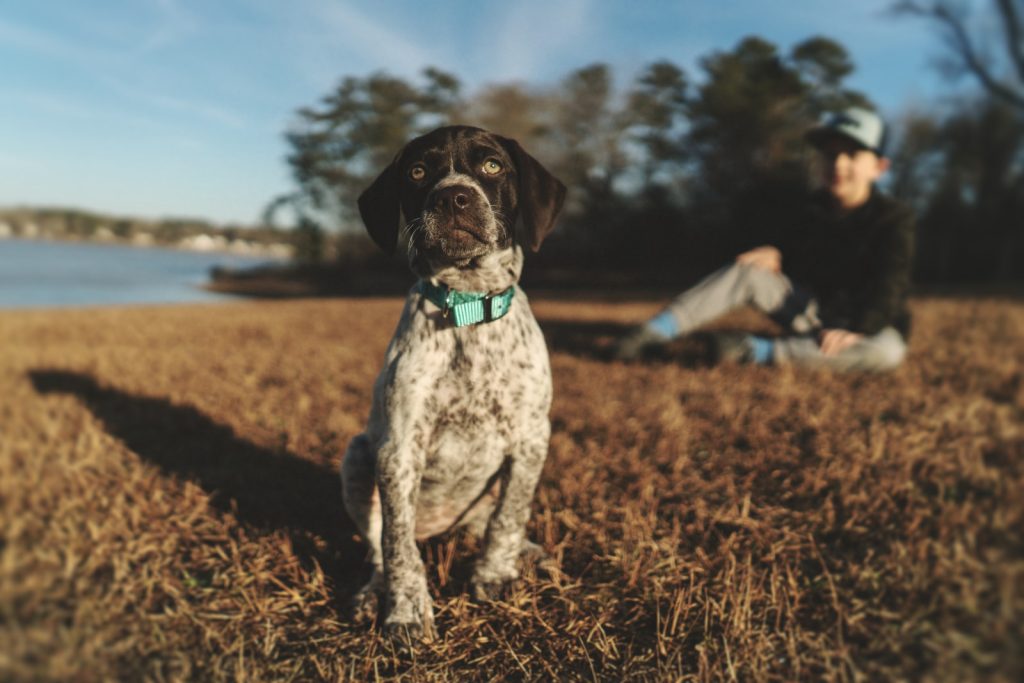
Garment types and when to use each
Fleece sweaters or pullovers work for dry, cool weather, roughly 35 to 55°F.
Fleece traps body heat well, is breathable, lightweight, and dries faster than wool.
It handles dry cold well. It does not block rain or snow. If the dog is going outside in wet conditions, a fleece alone is not enough.
Waterproof shells block rain and wet snow but add no warmth on their own. Water-resistant and waterproof are not the same.
A truly waterproof jacket rated above 10,000mm handles serious precipitation, while water-resistant options hold up only in light drizzle.
A shell over a fleece is a practical layering option for cold wet days.
Insulated jackets trap heat from the inside.
Fill weight determines warmth: around 100 grams of polyfill works well for temperatures between 20 and 40°F; for temperatures below 20°F, look for 200 to 250 grams of fill or high-performance synthetics like PrimaLoft.
Combination jackets with a waterproof outer shell and an insulated or fleece lining cover the most conditions with one garment.
For mixed winters with cold rain, sleet, wet snow, and temperature swings, an insulated and waterproof combination is the most practical choice.
The tradeoff is breathability: active dogs can overheat in a heavy combo jacket, so a breathable membrane matters.
Tummy warmers or belly wraps are a GSP-specific consideration.
In extreme cold, a tummy warmer worn under the main winter coat adds meaningful insulation for the dog's underside.
Given how close a GSP's belly is to the ground relative to their chest height, belly coverage makes a real difference in deep cold or when walking on frozen ground.
Matching the coat to temperature
| Temperature | Scenario | Garment type |
|---|---|---|
| 45–55°F | Dry and calm | Light fleece sweater |
| 35–45°F | Dry cold | Fleece or lightly insulated jacket |
| 20–35°F | Cold, wet, or windy | Insulated jacket with waterproof shell |
| Below 20°F | Hard winter | High-fill insulated jacket with waterproof shell and belly coverage |
| Any temp, wet only | Rain | Waterproof shell, no insulation needed if it's mild |
Below 32°F, puppies, senior dogs, and dogs with short or thin coats are more prone to hypothermia and frostbite.
Below 20°F, hypothermia and frostbite can affect all dogs regardless of coat type.
Fabric and material considerations
Wool may be warm but is itchy and difficult to wash; a poly blend is a better practical choice.
For active dogs like GSPs, washability matters.
Nylon and polyester with a polyurethane coating, recycled polyester, and polyester-polyethylene mixes are durable and water-repellent options.
For the inner layer, natural fibers such as wool are always a reasonable choice, but if choosing polyester, microfiber fleece is a good option.
It's soft, breathable, and unlikely to trigger skin reactions.
One material consideration specific to active dogs: a dog jacket should be as quiet as possible in movement so the dog is not distracted or bothered by rustling during exercise.
Stiff or crinkly nylon can bother some dogs. Check for this before committing to a garment.
Fit details and practical features
Harness opening: if the dog uses a body harness, a custom harness opening can be added to many coats, but this modification makes the coat non-returnable and non-exchangeable.
Decide before ordering.
Closures: avoid designs with small buttons, hooks, or tags that can be chewed off.
Velcro belly straps and snap closures work well and allow adjustment across the GSP's deep-chest-to-narrow-waist profile.
Back length and tail clearance: coats designed for GSPs should cover the length and flank without interfering with the tail.
Most GSPs in the US have docked tails; coats cut for the breed account for this.
Belly coverage: for cold weather, a coat with belly coverage is an asset when hiking through deep snow or on very cold ground.
For rain in mild weather, less critical.
Reflective trim: useful for early morning or evening walks in lower light. Many functional jackets include this as standard.
Safety and signs your dog is cold
Shivering or trembling is the most common sign a dog is too cold.
Other signs include a hunched posture with a tucked tail, anxiety or restlessness, slowed movement, seeking shelter, and lifting paws off the ground.
With GSPs, shivering at rest is a reliable indicator that a coat is needed immediately.
Hypothermia occurs when body temperature drops below 98 to 99°F.
Body heat is lost faster when cold weather is combined with wind chill or when the dog's coat is wet.
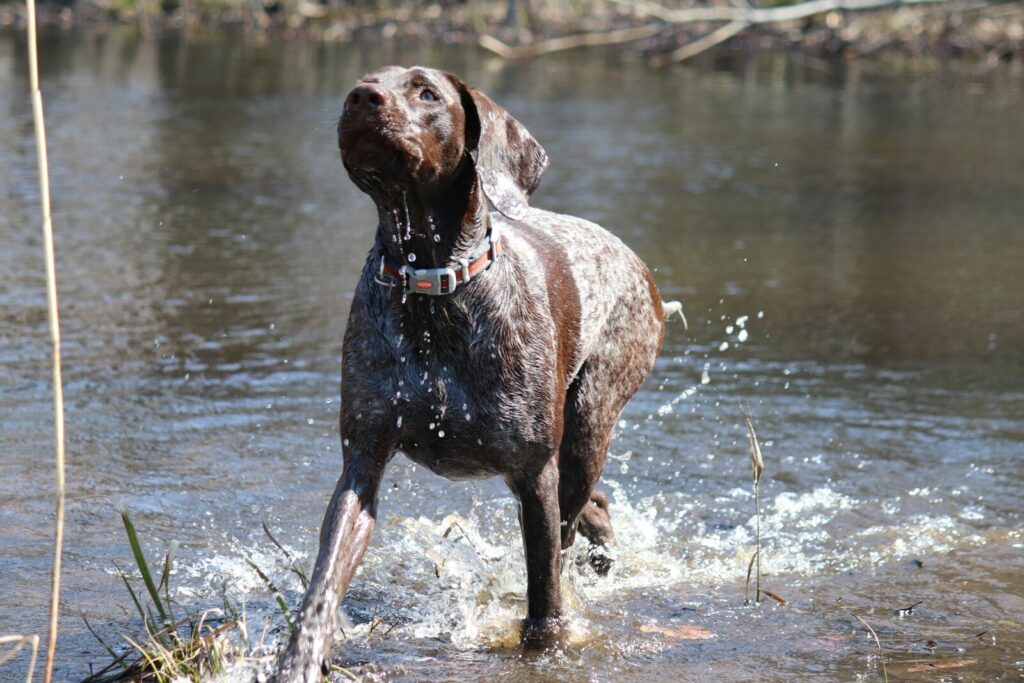
A GSP that has been swimming, retrieved from water, or simply been out in rain without a waterproof shell is at real risk below 40°F.
The recommended indoor temperature for GSPs in winter is around 68 to 72°F (20 to 22°C).
A cozy bed away from drafts is part of keeping them comfortable in the colder months.
Common misconceptions
Generic dog sizing by weight almost always fails for GSPs.
A 60-pound GSP needs a coat sized for their 60-pound chest circumference, but their waist might match a 35-pound dog.
Weight-based sizing produces a coat that is either too tight across the chest or too loose at the belly.
Another misconception: GSPs don't need clothing because they're athletic.
Activity does generate body heat, but a GSP that finishes a hard run and stands in the cold air for more than a few minutes will cool down quickly.
The need for a coat is most acute during transitions between activity and rest.
Recommended approach
- Measure the neck, chest girth, and back length before looking at size charts.
- Use the chest measurement as the primary sizing reference.
- Choose insulation weight based on the lowest expected temperature the dog will face during use.
- Choose a waterproof shell if the dog will be outdoors in rain or wet snow.
- Consider breed-specific cuts designed around the GSP's chest-to-waist ratio if standard sizing results in poor belly fit.
- Let the dog wear the coat indoors first to check for rubbing, restriction at the shoulders, or discomfort. Monitor for any spots where the jacket is rubbing the wrong way.
- For dogs that use a harness, confirm harness compatibility before finalizing the purchase.
References
- German Shorthaired Pointer Club of America – Breed Standard: https://gspca.org/breed/standard/
- German Shorthaired Pointer – Wikipedia: https://en.wikipedia.org/wiki/German_Shorthaired_Pointer
- Hypothermia in Dogs – PetMD: https://www.petmd.com/dog/conditions/cardiovascular/dog-hypothermia
- Voyagers K9 Apparel – GSP Measuring Guide: https://k9apparel.com/pages/german-shorthaired-pointer-measuring-guide
- Voyagers K9 Apparel – GSP Winter Coat: https://k9apparel.com/products/german-shorthaired-pointer-dog-winter-coat