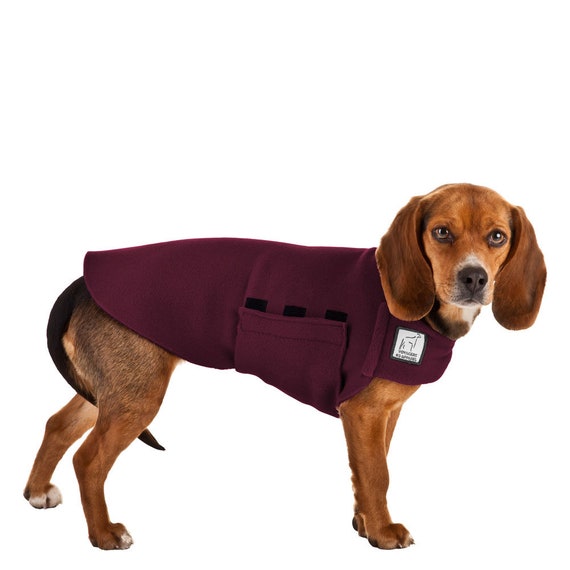
A Chihuahua loses body heat faster than almost any other dog.
The breed weighs two to six pounds and carries little body fat. Most have a single coat with no insulating undercoat.
Put that combination outside in the cold and the dog starts to shiver within minutes.
Clothing here solves a real physiological problem.
Why Chihuahuas actually need clothes
Thermoregulation and the missing undercoat
Most cold-climate dogs have two coats: a coarse outer layer and a dense undercoat that traps warm air against the skin.
Chihuahuas usually have one. Smooth-coat Chihuahuas have a thin single coat, and long-coat Chihuahuas have more fur but still little undercoat.
Without that trapped layer of air, heat leaves the body quickly.
Size makes it worse. A small body has more surface area relative to its mass, so it sheds heat faster than a large body does.
A two-pound dog cools down far quicker than a sixty-pound one in the same wind.
At what temperature does a Chihuahua get cold
Below about 45°F (7°C), most Chihuahuas need a layer for any walk longer than a few minutes.
Below 32°F (0°C), they need one for even short trips outside, and time outdoors should be cut short.
Wind and rain lower the effective temperature, so a damp 45°F day can feel colder to the dog than a dry 40°F one.
Watch the dog, not just the thermometer. Some individuals handle cold better than others, and age, health, and body condition all move the threshold.
Hypothermia, frostbite, and why shivering matters
Shivering is the body generating heat through muscle movement. In a Chihuahua it works as an early warning that the dog is losing the temperature fight.
If you see it, the dog is already cold.
Left in the cold, a small dog can develop hypothermia, where core body temperature drops below the safe range.
Signs include shivering that then stops, sluggishness, weakness, and stiff movement.
Frostbite hits the ears, tail, and paws first. Veterinarians treat both as emergencies, so don't wait them out; warm the dog and call a vet in any clear case.
How to measure a Chihuahua correctly
A garment sized off a guess fits badly, and a badly fitting one either slips off or pins the legs.
Three numbers do most of the work: back length, chest girth, and neck girth.
Apple-head vs deer-head: why the skull and neck change the fit
Chihuahuas come in two rough builds. Apple-head dogs have a round, domed skull, a shorter muzzle, and often a shorter, thicker neck.
Deer-head dogs have a longer muzzle, a flatter skull, and usually a longer neck with a slightly longer back.
That difference changes the fit. A sweater cut for an apple-head's short neck can choke or ride up on a deer-head.
A collar opening sized for a deer-head can sag on an apple-head.
Most size charts label everything "small dog" and ignore the split, which is why two Chihuahuas of the same weight can need different sizes.
Measure your own dog rather than trusting the breed label.
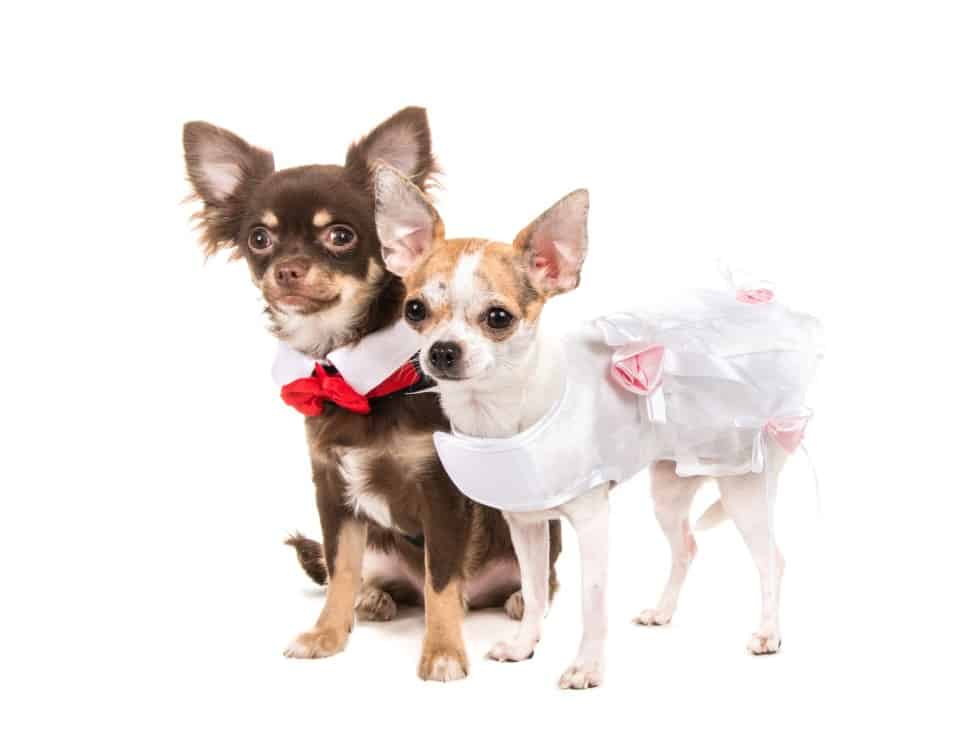
The three measurements that matter
- Back length. Measure along the spine from the base of the neck, where a collar sits, to the base of the tail. This sets the length of the garment. Too long and it covers the genitals or gets in the way of toileting. Too short and it leaves the back exposed.
- Chest girth. Measure the circumference of the chest at its widest point, just behind the front legs. It is the most important number, because the chest is the bulkiest part of the dog and the spot where tight clothing restricts breathing. Add a finger's width of slack.
- Neck girth. Measure around the base of the neck where a collar rests. This sets the collar opening so the head fits through without the garment hanging loose.
[Insert illustration showing exact measurement points on a Chihuahua]
Use a soft tailor's tape, measure on a standing dog, and don't pull the tape tight.
Write the numbers down before you shop.
Chihuahua size chart by weight and measurements
Sizes differ between brands, so always check the maker's own chart against your dog's numbers.
The table below gives typical ranges as a starting point.
| Size | Weight | Back length | Chest girth | Neck girth |
|---|---|---|---|---|
| XXS (teacup) | 1–2 lb (0.5–1 kg) | 6–7 in (15–18 cm) | 8–10 in (20–25 cm) | 5–7 in (13–18 cm) |
| XS | 2–4 lb (1–1.8 kg) | 7–9 in (18–23 cm) | 10–12 in (25–30 cm) | 6–8 in (15–20 cm) |
| S | 4–6 lb (1.8–2.7 kg) | 9–11 in (23–28 cm) | 12–14 in (30–36 cm) | 7–9 in (18–23 cm) |
| M | 6–8 lb (2.7–3.6 kg) | 11–13 in (28–33 cm) | 14–16 in (36–41 cm) | 8–10 in (20–25 cm) |
When a dog falls between two sizes, go by chest girth first, then back length.
A garment that fits the chest but runs slightly long beats one that fits the length but squeezes the ribs.
Shop the dog drama
Quick exits to coats, collars, beds, crates, harnesses, leashes, muzzles, and grooming - now without the old image menu circus.
A basic functional wardrobe
Four pieces cover most of what a Chihuahua needs. Add decorative outfits after these if you want them.
Brands such as Hurtta, Ruffwear, and Canada Pooch make cold-weather gear in shapes that suit awkward proportions like a broad chest and short back, which is the build that trips up generic sizing on a Chihuahua.
Winter coats
A winter coat is the main piece for cold weather.
Look for a fleece or fabric lining for warmth, a water-resistant or windproof outer shell, and full coverage of the chest and belly, since that is where a low-slung dog loses heat to cold ground.
Velcro or snap closures along the back let you fit it over the chest without forcing it over the head, which many Chihuahuas hate.
Raincoats and windbreakers
A wet coat pulls heat out of a Chihuahua fast, so a waterproof shell matters in any rainy climate.
A raincoat should be lighter than a winter coat, with a waterproof outer fabric and ideally a hood or raised collar.
Some have a thin fleece lining for cold rain, while a plain shell works for mild wet days.
Coverage down the belly keeps road spray off.
Fleece sweaters for home and sleep
Indoors, a thin fleece sweater keeps a Chihuahua comfortable in a cool house or at night without the bulk of a coat.
These are the lightest layer and the easiest to put on, which makes a fleece sweater a good first garment for a dog still getting used to clothes.
Knit sweaters look the part but can snag claws and stretch out of shape, so check the weave.
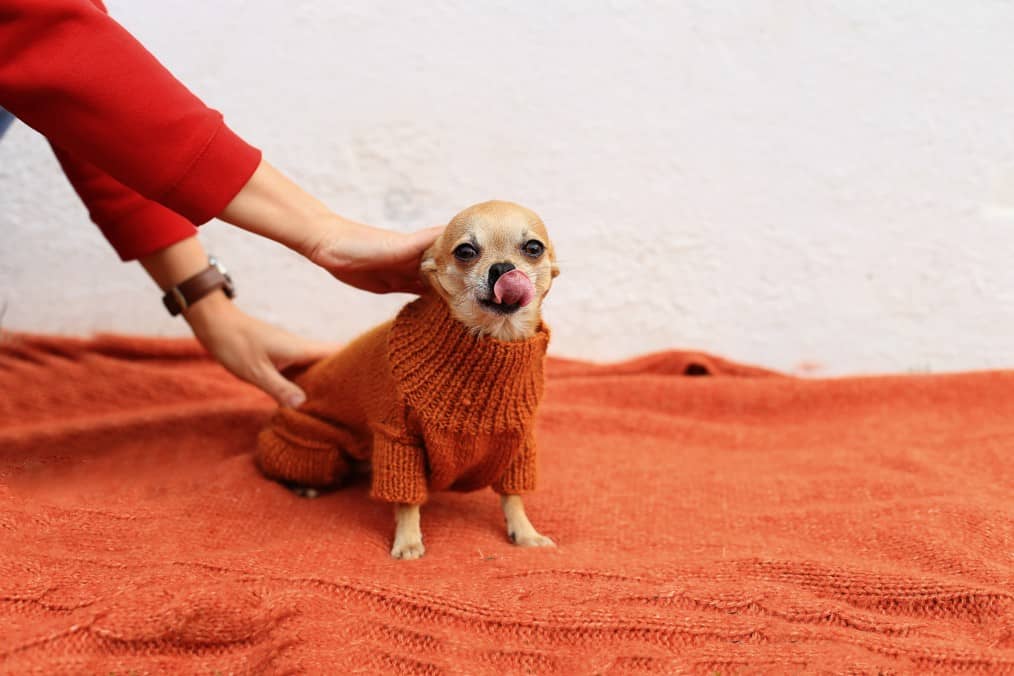
Wearing clothes with a harness
A coat and a harness have to share the same small body, and getting that wrong can hurt the dog.
There are two main ways to combine them.
Clothes with a built-in D-ring
Some coats and harness vests have a leash ring sewn into the back, so the garment doubles as the harness.
The pulling force spreads across the chest and back through the coat itself.
This keeps the layers simple, but the ring is only as strong as its stitching, so test it on a small, calm dog before trusting it on a puller.
Models with a harness hole
Other coats have an opening or slit on the back that lets a separate harness underneath poke through, so you clip the leash to the harness, not the coat.
The order goes harness first, coat over it, harness ring out through the hole.
You get a proper harness for control and a separate coat for warmth, and you can wash or swap either one on its own.
Why a leash over a thick coat can hurt the throat
Never clip a leash to a collar over a bulky coat, and never let a harness sit so loosely over thick clothing that it slides toward the throat.
A Chihuahua has a delicate trachea, and the breed is prone to a collapsing windpipe.
Veterinarians advise against attaching a leash to a Chihuahua's collar for this reason: a jerk at the neck can injure the windpipe.
A well-fitted harness that sits snug against the body, with the coat accounted for, keeps the force off the throat.
If a layer of clothing makes the harness loose, refit the harness over the clothing rather than tightening the collar.
Material weight and comfort for small legs
A Chihuahua's legs are thin and the whole dog might weigh four pounds. Heavy or stiff fabric tires the dog and changes how it walks.
Weigh the garment in your hand: if it feels heavy to you, it is heavy on the dog.
Soft, light, flexible materials suit this breed better than thick, rigid ones.
Avoiding overheating indoors
Clothes that help outside can overheat a dog indoors.
A fleece sweater in a heated room can push a Chihuahua past comfortable into panting and restlessness, with the dog hunting for cool floor tiles.
Take the coat off when you come in from a walk. If you leave a house sweater on, keep it thin and watch for panting or the dog trying to wriggle out of it.
A dog left dressed and unsupervised can overheat without anyone noticing.
Fabrics that don't fight the stride
A garment should move with the dog.
Look for stretch in the fabric or panels, elastic cuffs that don't dig in, and a cut that leaves the shoulders and hips free.
Test it by watching the dog walk: full strides, no shortened steps, no high-stepping or refusal to move.
If the legs look hobbled, the garment is too tight or too stiff.
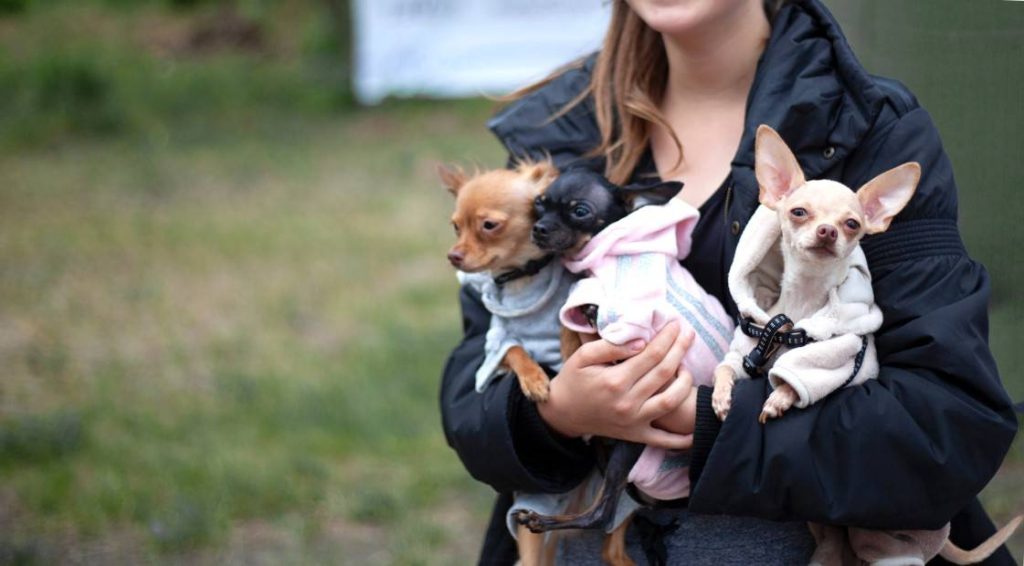
What to do if your Chihuahua refuses to wear clothes
Plenty of Chihuahuas freeze or go limp the first time something goes over their back.
The reaction is fear: clothing feels strange, and the breed spooks easily. You can train past it in about a week with patience and treats.
Why the dog freezes or panics
The freeze is a fear response. A garment restricts movement and feels foreign, and a nervous dog reads that as a threat.
Forcing it on confirms the fear and makes the next attempt harder. Pulling something tight over the head, a common Chihuahua dislike, makes it worse.
The aim is to make clothing predict good things and feel like nothing much.
A seven-day plan to get a Chihuahua used to a sweater
Day 1: Let the dog sniff the sweater on the floor. Drop treats on and around it. No wearing yet.
Day 2: Drape the sweater over the dog's back for two or three seconds, treat, remove.
Repeat a few times.
Day 3: Put the dog's head through the neck opening only, treat, take it off. Keep it short.
Day 4: Get one front leg in, then out, with treats throughout. Stop while the dog is still relaxed.
Day 5: Both legs and the full sweater on for thirty seconds, then off. Treat the whole time.
Day 6: Leave it on for a few minutes indoors while you play or feed the dog, so the dog stays busy.
Day 7: Wear the sweater for a short, fun walk. The reward is the walk itself plus treats.
Go at the dog's pace. If a day goes badly, drop back to the previous step. End each session while the dog is still calm rather than pushing to a meltdown.
A dog that never settles in soft clothing after weeks of slow work should see a vet, in case something physical is bothering it.
Frequently asked questions
Do Chihuahuas need clothes at home?
Sometimes. A Chihuahua in a warm house usually doesn't need clothing during the day.
In a cool house, a drafty room, or at night when the heating drops, a thin sweater helps a dog that shivers or curls up tight.
Watch the individual: a Chihuahua that seeks out blankets and warm laps is telling you it feels cold.
What fabric is best for sensitive skin?
Soft, breathable materials sit best against a Chihuahua's thin coat and skin. Cotton and fleece are common, gentle choices.
Avoid rough wool against bare skin, scratchy seams, and anything that traps moisture.
Wash new clothing before first use to remove residues, and check for rubbing at the armpits and neck, where friction sores start.
Do standard "small dog" sizes fit Chihuahuas?
Often not well.
A generic "small dog" size assumes a build that many Chihuahuas don't have: the breed runs short in the back, narrow in the chest, and varies between apple-head and deer-head types.
A garment cut for a small terrier or pug shape can hang long or gape at the neck.
Measure your dog and match the numbers to the brand's own chart instead of trusting the size label.
Do Chihuahuas need boots for winter walks?
In harsh conditions, yes. Snow, ice, road salt, and freezing pavement hurt small paws, and salt can crack and irritate the pads.
Boots protect against all of that on cold walks.
Many Chihuahuas hate them at first, so introduce them the same slow way as a sweater, one paw at a time with treats.
For a light cold, a paw balm on the pads takes less effort.