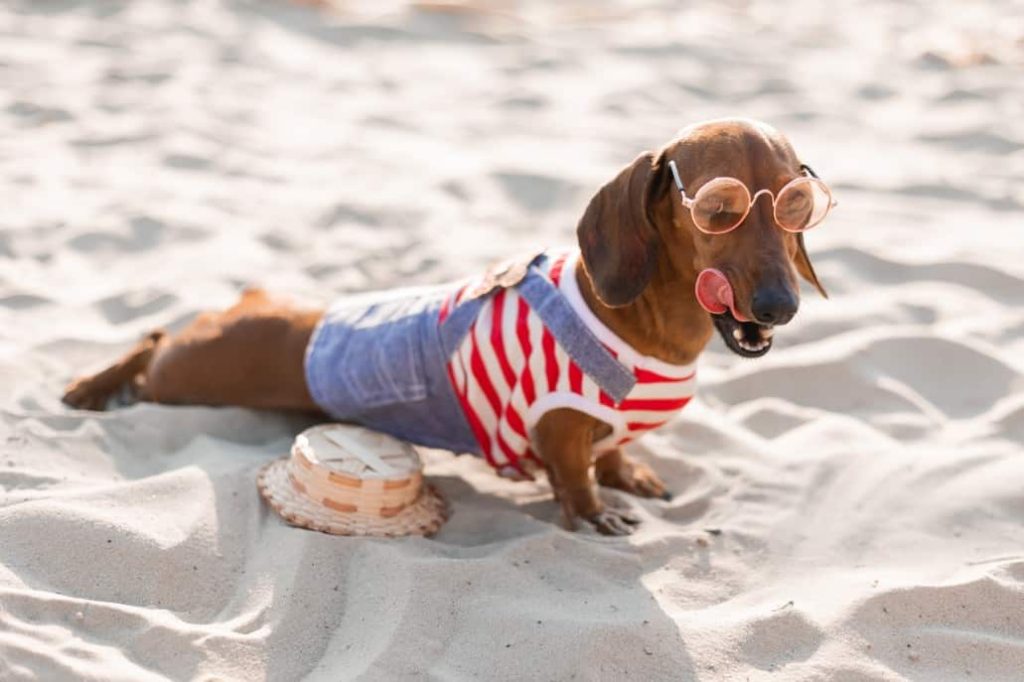
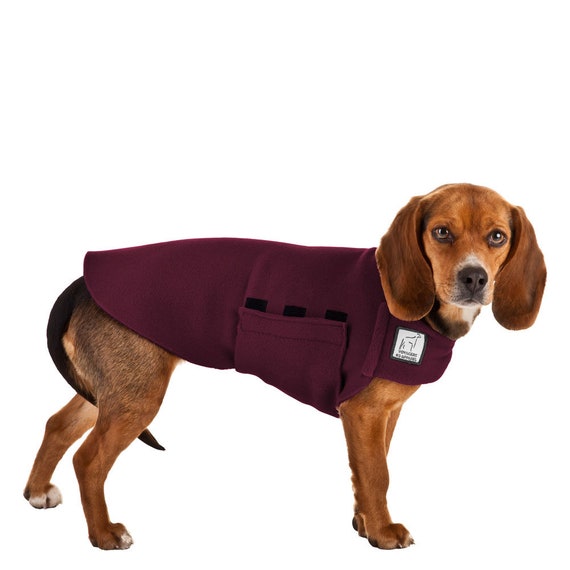
A dachshund put in a standard small-dog coat ends up with a garment that gaps at the chest and slides up the back.
The breed breaks the proportions most patterns assume.
The spine runs long, the ribcage sits deep and wide, and the legs are short enough that a sleeve cut for a beagle swallows the whole foot.
Clothing made for dachshunds adjusts for all of that, and the fit matters for more than looks.
A coat that keeps the belly off cold, wet ground also protects a back that already tends toward disc trouble.
This guide covers when a dachshund actually needs clothing, how to measure one correctly, what to buy for each season, and what separates a well-cut garment from a badly cut one.
Do dachshunds need clothes? A vet's view
Yes, more often than owners of larger or thicker-coated dogs expect. Two things work against a dachshund in the cold.
The coat is thin, especially on smooth-coated dogs, and the body sits low, so the belly and chest stay close to frozen or wet ground the entire walk.
Heat leaves a small body faster than a large one, too. A dachshund loses warmth quickly once it stops moving.
At what temperature does a dachshund need clothing
Below roughly 10 °C (50 °F) a smooth-coated dachshund benefits from a layer on longer walks.
Below freezing, insulation stops being optional, and in hard frost a full insulated suit keeps the dog walking instead of cutting the outing short.
| Temperature | What most dachshunds need |
|---|---|
| Above 12 °C (54 °F) | Nothing, or a light cape in rain |
| 5 to 12 °C (41–54 °F) | Sweater or lined vest on longer walks |
| 0 to 5 °C (32–41 °F) | Insulated jacket, belly covered |
| Below 0 °C (32 °F) | Full insulated suit with fleece lining |
Wind and damp shift these numbers up.
A wet 4 °C day chills a dog faster than a dry one at -2 °C, so treat rain and wind as a reason to add a layer rather than skip one.
Differences between the coat types
The three dachshund coats handle cold differently, and the garment should match.
- Smooth-coated dachshunds carry the least insulation of their own and need the most help. A lined or insulated layer in winter, a sweater in cool weather.
- Longhaired dachshunds keep more warmth on their own but mat easily under fabric. Look for a smooth inner lining, silk or satin, so the coat doesn't tangle and felt where the garment rubs.
- Wirehaired dachshunds have a coarse weather-resistant coat and rarely need heavy insulation. Their problem is wet and burrs, so a water-shedding shell does most of the work.
Back protection and IVDD
Dachshunds are prone to intervertebral disc disease, a condition where the cushioning discs in the spine rupture or slip.
Cold plays a quiet part in it.
A chilled dog tenses its back and shoulder muscles, and a spasming muscle pulls on a spine that already carries more length than it was built to support.
Keeping the core warm reduces that clenching.
The garment itself can help or hurt. A suit that binds across the shoulders or forces the back into an arch works against the dog.
The cut should follow the natural topline and let the legs move freely, with no seam digging in when the dog stretches or jumps.
How to measure your dachshund
Buying by breed name fails because two standard dachshunds can differ by several centimetres.
Measure the dog with a soft tailor's tape, with the dog standing square on all four legs, not sitting.
The three measurements that matter (back, chest, neck)
- Back length. Measure from the withers, the bony ridge at the base of the neck between the shoulder blades, straight back to the base of the tail. Stop at the tail base, not partway down the spine. This number sets the length of the garment.
- Chest girth. Wrap the tape around the widest part of the ribcage, just behind the front legs, and pull it snug without compressing. The deep chest is where most coats fail a dachshund, so this is the measurement to trust over any size label.
- Neck girth. Measure around the base of the neck where a collar sits. This sizes the collar opening and the hood, if there is one.
Write all three down. When a garment's back length fits but its chest is tight, size up on chest and accept a slightly long back rather than the reverse.
Size chart for dachshunds
Use this as a starting point, then confirm against your own three numbers. The dog's chest girth decides the size more than its weight or type.
| Type | Back length | Chest girth |
|---|---|---|
| Rabbit (kaninchen) | 26–32 cm | up to 30 cm |
| Miniature | 30–38 cm | 30–37 cm |
| Standard | 38–52 cm | 37–48 cm |
A dog that lands between two rows, common with a broad chest on a shorter back, is the reason adjustable garments exist.
More on that below.
Shop the dog drama
Quick exits to coats, collars, beds, crates, harnesses, leashes, muzzles, and grooming - now without the old image menu circus.
Types of clothing by season
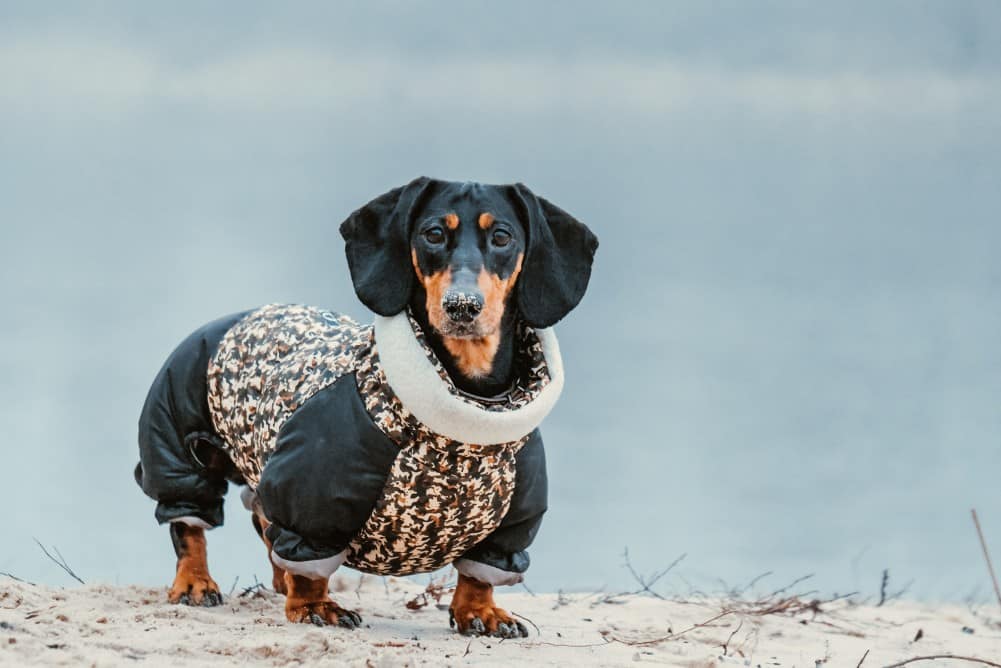
A dachshund's wardrobe comes down to three pieces, each for a different kind of weather:
- A winter insulated suit for frost and snow.
- A membrane raincoat or cape for rain, mud, and slush.
- A knitted sweater for dry cool weather and indoors.
Winter insulated suits
For frost, a full suit covers the back, sides, belly, and the tops of the legs.
Look for a dense synthetic fill (Thinsulate or quality padding) and a fleece lining that holds warmth against the skin.
The belly panel should be closed, since an open underside leaves the most exposed part of a dachshund bare to the snow.
Autumn raincoats and capes
For mud, slush, and wet snow, the job is keeping water out rather than holding heat in.
A membrane shell sheds rain and blocks wind without bulk. A cape covers the back and chest for quick walks.
A fuller raincoat with a closed belly suits a dog that drags its underside through every puddle, which a low dachshund does.
Indoor and mid-season sweaters
A knitted sweater handles dry, cool weather and chilly rooms. It adds no waterproofing, so it stays a dry-weather and indoor piece.
Soft yarn that doesn't catch on a longhaired coat is the thing to check.
Anatomical cut: what to check before you buy
Most reviews stop at colour and price. For a dachshund the cut decides whether the garment works, and three details separate a good one.
Where the fasteners sit
The zipper or closure belongs on the back, not the belly.
A dachshund walks with its underside centimetres from the ground, so a belly zip clogs with mud within a block and scrapes the skin against the dirt.
A back closure stays clean and lets you dress the dog without flipping it over.
Sleeve length for short legs
Sleeves cut for normal proportions hang past a dachshund's short legs, and the dog steps into the loose fabric and trips, or the foot jams inside.
Sleeves should end above the wrist joint, or the garment should leave the lower leg open.
A dog that refuses to walk in a new suit is often caught in oversized sleeves.
A closed belly for low clearance
Low ground clearance is the trait that makes the belly panel matter.
In winter it keeps snow off the underside; in the city it shields the lower belly from road salt and de-icing chemicals that sit in slush.
A garment that protects only the back leaves the most vulnerable surface exposed.
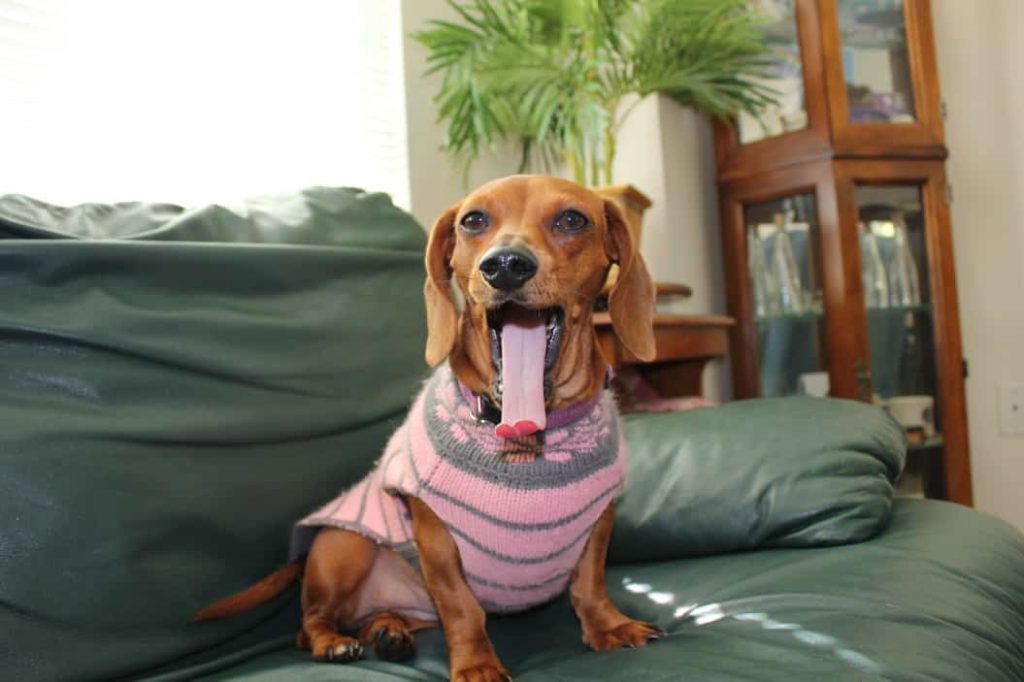
Making dog clothes for a dachshund yourself
A simple cape or sweater is within reach for anyone who sews or knits, and a custom piece solves the in-between-sizes problem that store sizes can't.
Choosing safe materials
Pick fabrics that won't irritate skin or trap damp.
Fleece works for a warm lining, a light membrane or coated nylon for a rain shell, and soft natural-fibre yarn for a sweater.
For a longhaired dog, line the inside with a smooth fabric so the coat slides instead of matting.
Skip anything that frays into loose threads a dog can chew or swallow, and keep small fasteners away from the mouth.
A basic cape, step by step
- Measure back length, chest girth, and neck girth as above.
- Draw a rectangle the length of the back and wide enough to wrap two-thirds of the way around the body.
- Cut a curved notch at the front for the neck and shape the corners so they don't gape behind the front legs.
- Add a fleece lining cut to the same shape for cold-weather versions.
- Attach a wide belly strap with hook-and-loop tape, placed so it sits behind the front legs and adjusts to a deep chest.
- Fit it on the dog and trim where it bunches before sewing the final seams.
FAQ
How do I get a dachshund used to wearing clothes? Go slow and keep it positive. Start indoors with the garment on for a minute or two, give a treat, and take it off before the dog reacts.
Stretch the time over several days and pair it with something the dog likes, a walk or a meal.
Forcing a struggling dog onto its back and zipping fast usually creates a dog that bolts at the sight of the suit.
Why does my dachshund refuse to walk in a jumpsuit? Almost always the fit. Check that the sleeves aren't too long and the legs aren't trapped inside, that nothing binds across the shoulders, and that the belly strap isn't too tight.
A dog frozen mid-step is telling you the garment restricts it. Once the cut is right, most dachshunds walk normally within a few outings.
Can I use universal-size dog clothes? Rarely with success. Generic sizing assumes average proportions, so a coat sized to the dachshund's long back hangs loose at the chest, and one sized to the chest stops short of the tail.
If you buy off the shelf, choose garments with an adjustable belly strap and a cut described for long-bodied breeds.
Do dachshunds need boots in winter? In salted cities, yes, or at least paw protection. Road salt and de-icers irritate the pads and burn if licked, and ice packs into the fur between the toes.
Many dachshunds tolerate boots poorly, so a paw balm or wax applied before the walk is a workable alternative that blocks salt and ice without the dog fighting the boots.
Measure your own dog before you buy anything, and let the chest girth lead.
Get that one number right and most of the fit problems that send dachshund coats back to the shop never come up.