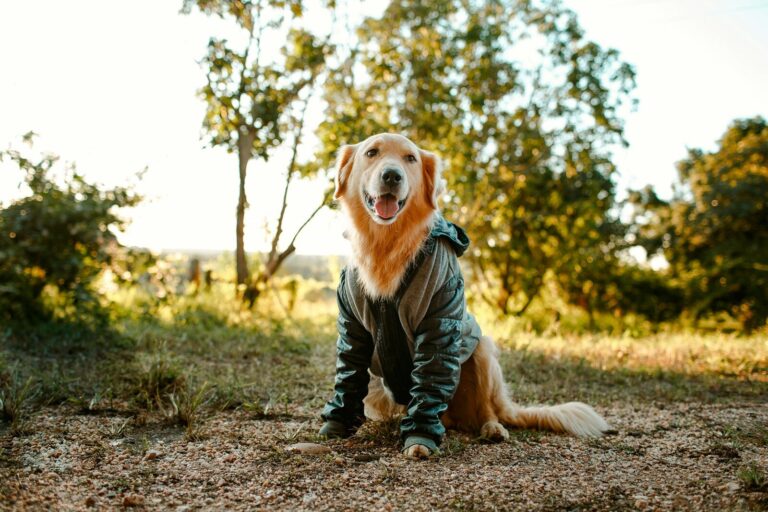
Dog clothes for Labrador Retrievers are protective gear for wet, cold, or rough conditions.
The breed carries a dense, water-repellent double coat, so healthy Labradors rarely need winter insulation.
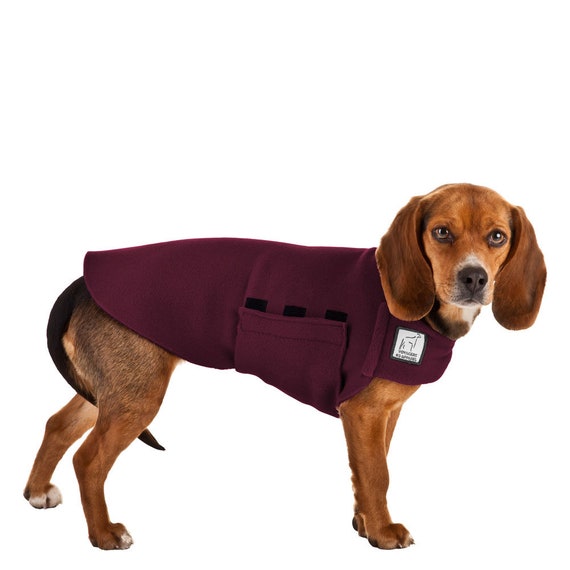
Most owners reach for a lightweight membrane raincoat that keeps mud off the dog and a cut shaped for the wide chest, so the gear protects without restricting movement.
Does your Labrador actually need clothes?
Most of the time, no. A healthy adult Labrador stays warm in cold weather on its own coat.
Clothing earns its place in three cases: hard frost below roughly -15°C, senior or sick dogs whose temperature control has dropped, and wet, muddy walks where a raincoat saves you from washing a 30-kilo dog afterward.
The double coat and the risk of overheating
A Labrador's coat has two layers: a coarse outer guard coat that sheds water, and a dense insulating undercoat beneath it.
Together, they trap warm air against the skin and push rain off the surface.
Add a fleece-lined jacket on top of that system in autumn or during an active walk, and the dog overheats fast.
For a young, moving Labrador, a thick winter coat does more harm than going without one.
When winter clothing actually makes sense
Winter clothing helps in a few specific cases:
- Hard frost below about -15°C, when even a full coat can't hold enough heat, especially for a leaner dog.
- Senior dogs past ten years old, whose temperature regulation has slipped, and dogs with arthritis that stiffens in the cold.
- Sick, underweight, or recovering dogs whose bodies are already working hard.
Even then, a light, breathable coat does the job. A padded one will overheat an active dog within minutes of setting off.
Raincoats protect from mud, not cold
Most Labrador owners buy a coat for one practical reason: mud. A Labrador loves water and dives into every puddle and ditch on the walk.
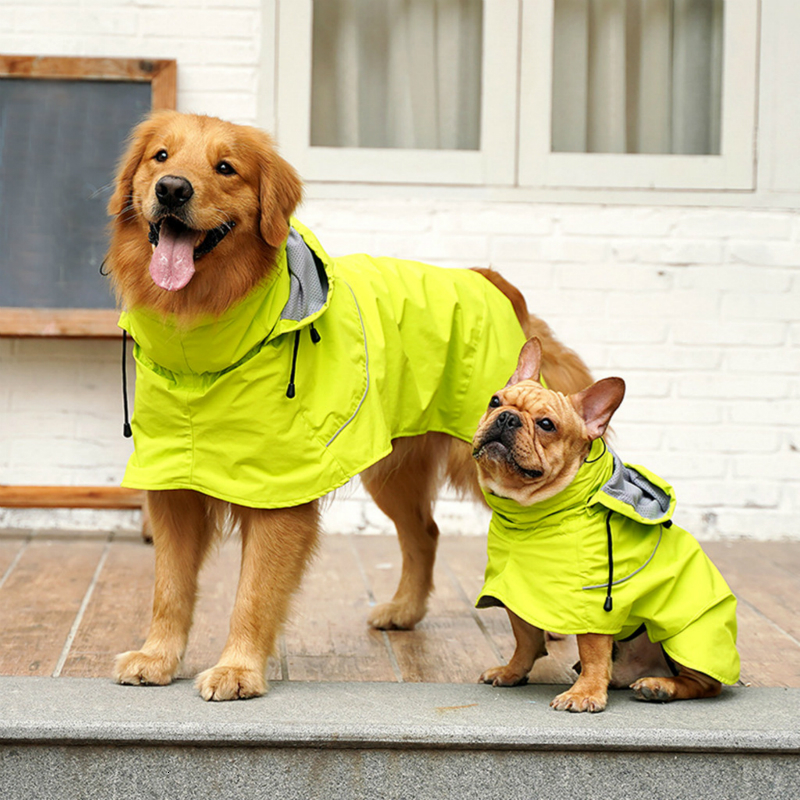
A lightweight membrane raincoat that covers the back and belly keeps the worst of it off the dog, so you towel it down instead of running a full bath after every rainy walk.
How to measure a Labrador the right way
Off-the-shelf sizing fails Labradors more often than it fails most breeds, and the reason is the chest.
The barrel-chest problem
Labradors are deep through the ribcage, a build often called a barrel chest.
A coat sized "Large" by back length frequently won't close around the chest, or it closes but binds the shoulders so the dog can't stride.
Owners then size up to fit the chest, and the coat hangs long and loose everywhere else, dragging in the mud it was bought to block.
Measure the chest first and treat back length as secondary.
The three measurements that matter
- Back length. From the base of the neck, at the withers where a collar sits, to the base of the tail. This sets the coat length.
- Chest girth. The widest point of the ribcage, just behind the front legs. For Labradors it is the make-or-break number. Keep the tape snug with room for two fingers underneath.
- Neck circumference. Around the base of the neck where the collar rests, not up near the head.
Take all three with the dog standing on a level surface, tape relaxed but not slack.
Write them down and check them against the maker's chart for every coat you consider, since a "Large" from one brand can run two sizes off another.
Shop the dog drama
Quick exits to coats, collars, beds, crates, harnesses, leashes, muzzles, and grooming - now without the old image menu circus.
Types of dog clothes that suit Labradors
Four categories cover almost everything a Labrador needs, sorted by season and job.
Lightweight membrane raincoats and shells
A membrane raincoat is the everyday coat for most owners.
Look for a true waterproof membrane rather than a water-resistant spray finish, no fleece lining (it traps heat and holds water), and a cut that leaves the back legs open so the dog can squat and run.
Reflective trim matters here, especially for black and chocolate Labradors that disappear in low light.
Brands built for active dogs, such as Hurtta and Ruffwear, tend to cut their shells deeper through the chest than mass-market gear.
Winter coats and capes
These cover the cold-weather exceptions listed earlier.
Shoulder freedom is the priority: a cape or coat that drapes over the back and fastens under the belly, leaving the front legs and shoulders unrestricted.
Reflective elements again for dark walks. Skip heavy padding for any dog that still moves at pace.
Cooling vests for summer
Large dark-coated dogs run hot, and black and chocolate Labradors absorb more heat in direct sun.
A cooling vest soaks up water and cools the dog through evaporation as it dries, which buys time against heat stroke on warm walks or at outdoor events.
Wet it, wring it, fit it, and re-wet it once it dries out.
Dog boots
Boots protect the pads from winter road salt and ice, and from sun-baked summer asphalt that can burn paws in seconds.
Most Labradors hate them at first and walk with an exaggerated high step for a minute or two.
Short indoor sessions with treats settle that down before you rely on the boots outside.
Common problems and how to fix them
The coat chafes under the legs
Problem: red, rubbed skin in the armpits and where the front legs meet the body.
Cause: stiff seams and tight armholes, common when a coat has been sized up to clear the chest.
Fix: choose a sleeveless cape-style coat that fastens under the belly rather than a four-leg suit, and check that the seams sit flat, away from the skin folds.
The dog freezes and refuses to walk
Problem: you put the coat on and the Labrador locks up, stands still, or won't take a step.
Cause: the gear feels strange and slightly restricting, and a young dog may treat a crinkly raincoat as a chew toy.
Fix: build it up slowly. Let the dog sniff the coat, drape it on for a few seconds with a treat, then for a minute, then for a short walk indoors, then outside.
Keep early sessions short and end on a good note.
The coat tears on branches in the woods
Problem: a thin raincoat shreds the first time you take a Labrador through brush and undergrowth.
Cause: light polyester rips on thorns and sticks. Fix: for dogs that crash through cover, pick a tougher face fabric.
Cordura nylon takes far more abrasion than standard polyester and holds up across seasons of rough walks.
Labrador clothing size chart
Sizes vary a lot between makers, so treat this as a starting point and always measure against the specific brand's chart.
The figures below cover typical adult Labradors, with females at the lower end and large males at the top.
| Size | Back length | Chest girth | Neck | Typical dog |
|---|---|---|---|---|
| L | 50–56 cm (20–22 in) | 70–80 cm (28–31 in) | 40–46 cm (16–18 in) | Smaller female |
| XL | 56–62 cm (22–24 in) | 80–88 cm (31–35 in) | 46–52 cm (18–20 in) | Male or larger female |
| XXL | 62–68 cm (24–27 in) | 88–96 cm (35–38 in) | 50–56 cm (20–22 in) | Large male |
If your dog falls between sizes, fit to the chest girth rather than the back length.
FAQ
Do Labradors get cold in winter? Rarely, if they are healthy adults. The double coat handles most cold-climate winters down to around -10°C for an active dog.
Below roughly -15°C, or for a senior, thin, or unwell dog, a light coat helps.
What size coat does a fully grown male Labrador need? Most adult males land in XL, with a chest girth around 80 to 90 cm.
Large males run to XXL.
Measure the chest behind the front legs and match it to the brand's chart, since back length alone will mislead you on a deep-chested dog.
Can you walk a Labrador in the rain without a coat? Yes.
The water-repellent coat protects the dog, and a Labrador stays comfortable in rain it would happily swim in anyway.
A raincoat here works for you, cutting down on mud and washing, not for the dog's warmth.