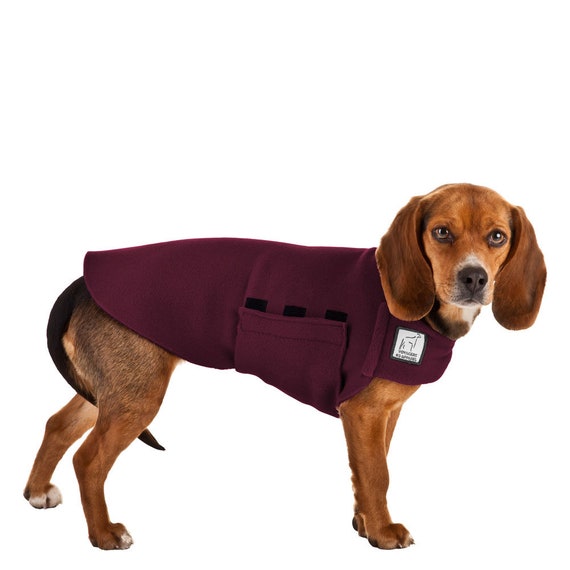
Most off-the-rack dog sweaters are cut for a tube-shaped body with even proportions.
Pit bulls have a wide rib cage, a thick neck, a narrow waist, and a short back, so a standard medium strains across the chest while it hangs loose at the belly.
Getting clothing right for the breed starts with understanding why they need it and ends with knowing how to measure, what fabric to buy, and how to fix the fit when nothing on the shelf sits right.
Why pit bulls actually need clothes
Muscle doesn't insulate.
A pit bull's bulk generates heat while the dog moves, but it does nothing to hold that heat in once the dog stops, because warmth escapes through the skin and coat, and a pit bull's coat is thin.
Temperature regulation and cold protection
A pit bull has a short, single-layer coat and no undercoat. Breeds built for cold, like huskies, grow a dense second layer that traps warm air against the body.
Pit bulls have nothing underneath, so heat leaves fast.
Below about 45°F (7°C) a short-coated dog starts to feel it, and below freezing a walk of any length gets risky: shivering and stiff joints set in within minutes of standing still.
A coat or sweater slows that loss. For a pit bull the target is the chest and back, the large flat surfaces where heat escapes.
Protecting sensitive skin and preventing allergies
Pit bulls rank among the breeds most prone to skin trouble.
Atopic dermatitis and contact allergies are common in the breed, and the short coat leaves little buffer between an allergen and the skin.
A light bodysuit blocks a lot of that contact.
Walking through tall grass, lying in pollen, rolling on a treated lawn: a thin cotton layer keeps the irritant off the belly and flanks, where pit bulls scratch most.
White and light-coated pit bulls also sunburn on the nose and any pink-skinned patch, and a covering shirt cuts the exposure on long days outside.
For a dog that already scratches, clothing breaks the cycle, stopping claws from reaching raw skin and giving a hot spot time to heal without a cone.
Compression clothing as anti-stress
A snug shirt that wraps the torso applies gentle, steady pressure, and for many dogs that pressure lowers anxiety during thunderstorms, fireworks, vet visits, and car trips.
Products like the ThunderShirt are built for this, and a close-fitting compression vest does the same job.
It won't work on every dog, but it costs little to try before reaching for medication.
How to measure a pit bull correctly (the bully fit)
Two pit bulls at the same weight can wear different sizes, so the label letters only get you close.
Measure the dog. You need three numbers: chest girth, neck circumference, and back length.
Measuring the broad chest
Chest girth decides whether a pit bull's clothing fits at all.
Run a soft tape around the widest part of the rib cage, just behind the front legs, and keep it snug without compressing.
Chest girth is also where mass-market clothing fails on the breed: a medium sized to a 40-pound dog's length will not close around a pit bull's barrel chest, and the seams give out at the shoulders.
When your dog's chest measurement falls between two sizes, go up.
Neck circumference and back length
Measure the neck where a collar naturally sits, around the base, not up near the jaw.
Pit bulls have thick, muscular necks, and an opening cut for an average dog can choke or rub.
Then take the back length, from the bump between the shoulder blades to the base of the tail, with the dog standing square.
A coat that runs past the base of the tail bunches when the dog sits and soaks up urine on males.
These two measurements catch the exact spots where pit bulls chafe first: the neck and the widest part of the chest.
Shop the dog drama
Quick exits to coats, collars, beds, crates, harnesses, leashes, muzzles, and grooming - now without the old image menu circus.
Best types of clothes for pit bulls (by season and purpose)
Winter coats and insulated blankets
Two properties matter in cold-weather gear, and they come from different materials.
Fleece is warm and breathable but offers no waterproofing; in wet snow it soaks through and then chills the dog.
A waterproof membrane shell blocks rain and wind but adds little warmth on its own.
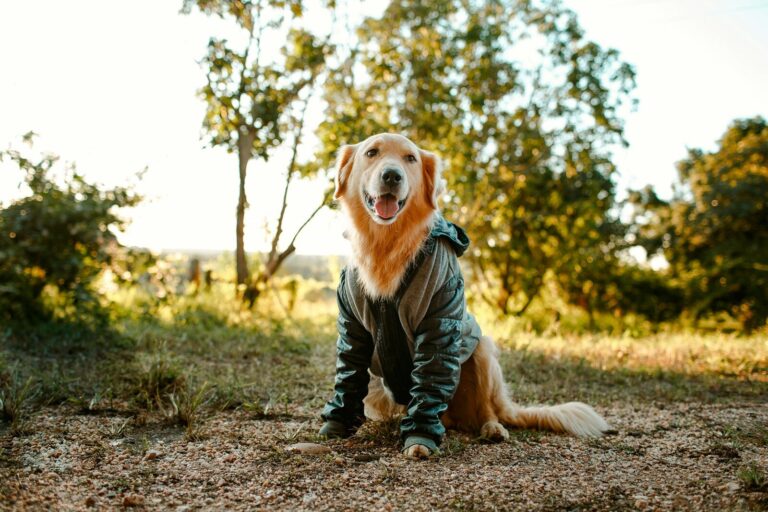
For a pit bull in cold, wet weather you want both: an insulated coat with a water-resistant outer face and a fleece or quilted lining.
Choose one with a high collar or a chest panel, since the chest takes the wind head-on.
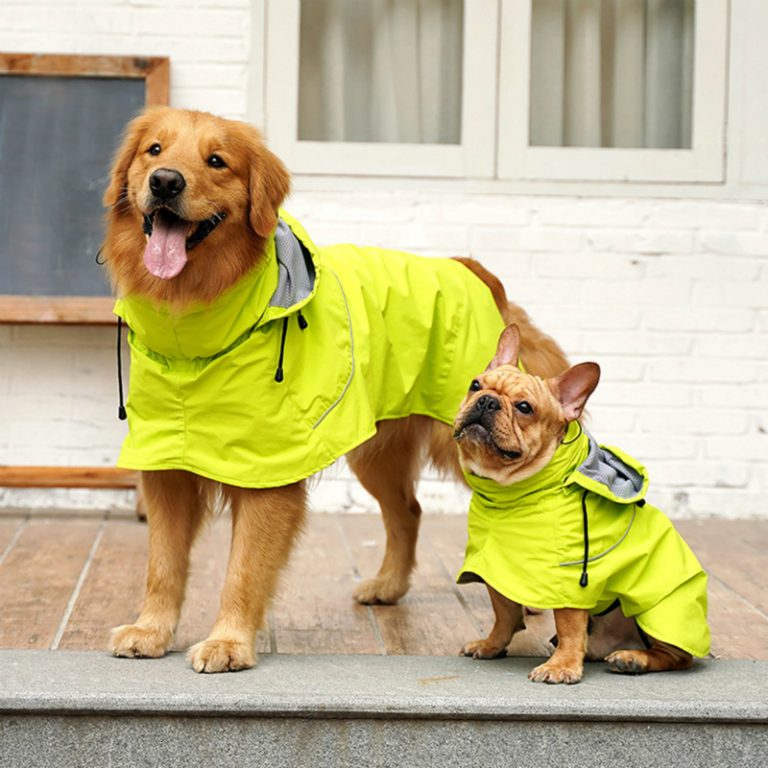
Waterproof raincoats
A raincoat does two jobs for an active pit bull.
It keeps rain off a coat that has no undercoat to wick water away, and it keeps mud off skin that irritates easily.
The catch with a high-energy dog is heat. A fully lined coat in a 50°F drizzle will overheat a pit bull that runs the whole walk.
For mild wet weather, pick a thin unlined shell that sheds water and still breathes, and save the insulated version for the cold.
Therapeutic pajamas and onesies
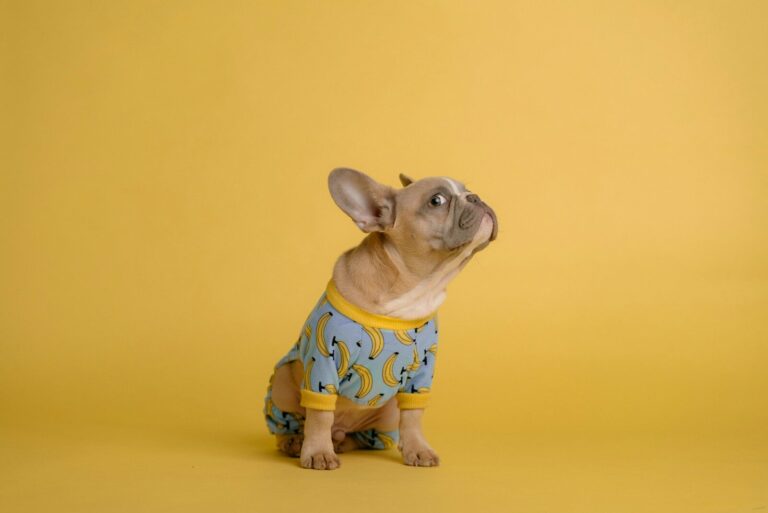
Onesies cover the torso and legs in soft cotton or bamboo knit, and they earn their place for medical reasons as much as comfort.
After surgery, a recovery suit covers an incision and keeps the dog from licking it, often with less stress than a plastic cone.
For a pit bull with atopic dermatitis, a onesie stops the constant belly- and flank-scratching that turns into open sores.
Bamboo and cotton breathe and sit gently on inflamed skin, which makes them the right call for all-day wear over harsher synthetics.
Hoodies, sweatshirts, and costumes
Here the job is social as much as practical.
A pit bull in a bright hoodie or a soft pajama print reads as less threatening to strangers on the street, and that changes how people react to the dog and its owner.
For a breed that carries a reputation it mostly doesn't deserve, a goofy sweater does real work in public.
A cotton hoodie also adds a light indoor layer for a dog that gets cold sitting still.
Durability and safety: materials and hardware
Durable fabrics for active play
Pit bulls play hard. They wrestle, drag, and roll on rough ground, and a thin sweater shreds in a week.
For a dog like this, look for ripstop nylon or Cordura, the fabrics used in working-dog gear and tactical wear, which resist tearing when the dog tumbles or snags on a fence.
Reinforced seams count as much as the fabric: double or bar-tacked stitching at the chest and leg openings takes the strain a pit bull puts on a garment.
Safe fasteners and seams
A pit bull's short coat gives the skin no protection from the clothing itself, so the hardware can do damage.
A zipper without an inner flap pinches skin on the back or belly. Stiff Velcro catches the short hairs and rubs the skin raw over time.
Choose zippers backed by a fabric guard, soft hook-and-loop, or sturdy plastic side-release buckles that close away from the skin.
Check the inside seams too, since raised or scratchy interior stitching rubs the chest and armpits, the spots where pit bulls chafe first.
What to do if clothes don't fit (alteration and DIY)
Plenty of owners run into the same problem: a coat that fits the chest swims at the waist, or one sized to the body won't close over the ribs.
How to adapt standard clothing
If a garment fits the chest but bags around the middle, take it in.
Turn it inside out, pin the belly seam tighter on each side, and sew a new seam or have a tailor do it.
To add room across a too-tight chest, open the side seams and set in an elastic gusset or a panel of stretch fabric; the give lets it close over the rib cage while staying snug elsewhere.
A length that runs too long is the easiest fix of all: hem it up so it stops at the base of the tail.
Custom-made
When alteration falls short, a maker who works from bully-breed patterns will cut to your dog's three measurements.
Custom costs more, and for a hard-to-fit pit bull, it solves the chest-versus-waist problem that no off-the-rack size gets right.
Search for tailors or small shops that list "bully fit" or sew for Staffordshire terriers and pit bulls; they already have the proportions worked out.
Frequently asked questions
At what temperature does a pit bull need a coat?
As a rough guide, a short-coated pit bull starts needing a layer around 45°F (7°C), and below 32°F (0°C), a coat becomes necessary for any walk longer than a few minutes.
Watch the dog, not only the thermometer: shivering, lifting paws off the cold ground, or hunching the back means it's already too cold.
Do dog pajamas help with atopic dermatitis?
Yes, indirectly.
Pajamas don't treat the underlying allergy, but they put a barrier between claws and inflamed skin, which stops the scratching and licking that turn flare-ups into infected sores.
A breathable cotton or bamboo onesie also keeps contact allergens like pollen and dust off the skin.
Use it alongside whatever your vet prescribes, never in place of treatment.
How to train an adult pit bull to wear clothes?
Go slow and pair it with food. Let the dog sniff the garment, drape it on for a few seconds, and give a treat, then build up to putting it fully on.
Start with something light, like a stretchy shirt, before a bulky coat. Keep the first sessions short and end while the dog is still relaxed.
Most settle within a week or two once clothing reliably predicts treats and walks.
Can you leave a dog in a sweater all day at home?
Better not to, at least unsupervised. A sweater can snag on furniture or a crate, and a chewer can pull threads loose and swallow them.
For a dog that needs constant skin coverage, a well-fitted recovery onesie built for long wear is the safer option, and even then, you should check the skin underneath once or twice a day for rubbing or trapped moisture.